Index 1 - 2 - 3 - 4- 5 - 6 - 7 - 8 - 9 - 10 - 11 - 12 - 13 - 14 - 15 - 16 - 17 -- --
6 : New Slavery
The following are six essential commands to recover our Habitat:
First, to produce less intrusive, small mono-vehicles, limiting the use of large cars to countryside trips; bikes, trams and trains can integrate in the landscape. Second, to avoid plastic packaging and plastics in habitat, clothing, tools, toys and furniture, except in specialized instrumentality applied to scientific research and machine parts. Third, to reinstate analogue techniques, they are recyclable: prints, books, films, records, stimulate our senses -sight, hearing, touch, taste, and smell- producing chiaroscuros, harmonics, fragances, touch and warmth. The digital world is amazing in a visual level, but it only emulates reality as a complementary tool. Fourth, to get food from areas close to where we live. Fifth: to correct the nature of Internet: "social networks" are run by concealed commercial organisations that have filed you in order to profit, monitor and handle your life. Sixth: to recover our right to privacy.
The Sixth command is, indeed, the most important: to become aware we must recover our freedom, we must act pointing towards that direction.
It refers to a factor that has transformed society in such a "electrifying" way, so violently that we are not conscious about how dramatically life of most people has changed. I refer to the influence of virtual information in our subconscious. Internet is indeed a fascinating technology, literally in-your-hands; at some point soon, it will be inside the body of many. However, it is developing wrongly. In the 60's, Internet originally connected the US Army, later in the 70's linking some US Universities, and it eventually became public in 1990. Following the ideas of thinker and economist Thorstein Bunde Veblen (1857-1929), particularly in The Theory of the Leisure Class (1899), it is clear that for the uneducated working class, for the careless middle class, for the irresponsible rich, that Internet became the quintessence of sources of unfulfilled desires. It is a quasi-infinite virtual territory, a global rubish bin wrapped and filled with data of all kind, boring images, banalities and sex, powered by people's ego. For those able to discern, it is indeed an amazing resource to get certain kind of information. But for the majority the opposite occurs: it is transforming humanity in a new species of slaves at all times connected with the device, this is, controlled and acknowledged by anonymous "entities". The nature of the Internet must be corrected by educating children and the population in general, by setting clear limits to out-of-control commercial corporations.
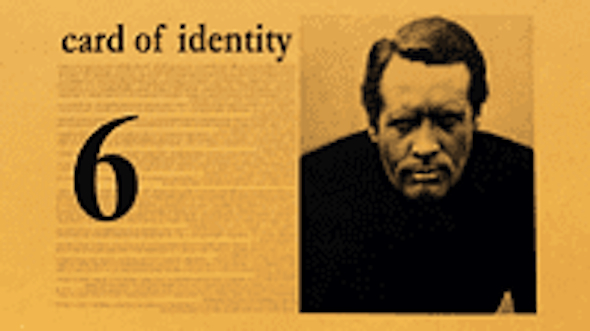
We must not allow "to be filed, indexed, briefed, debriefed, or numbered". The great Irish-American actor, writer and visionary Patrick McGoohan (1928-2009), who shared with me a common friend, referred by Orson Wells as "one of the big actors of our generation" created, acted and directed in 1968 the British series "The Prisoner", anticipating most of the dangers of "modern" electronic society:
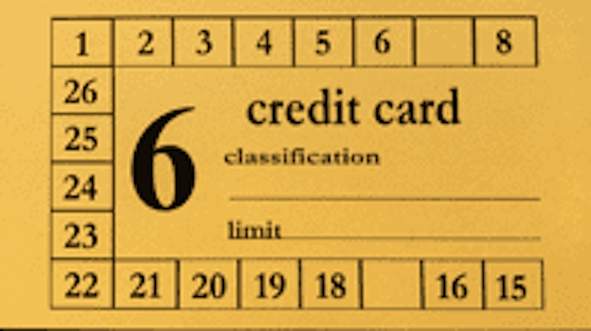
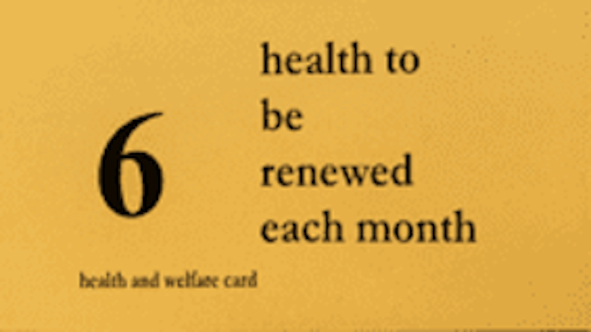
Spying technology through collected private information (core of the virtual world) is destroying an important principle of humanist civilization, represented in the right to think, the right to respect our privacy, the right not to follow the crowd; ultimately, freedom.
The obstacle of this new "slavery" status is that the subjects (most of us) are not really conscious about the destination to where we are pointing. A massive, silent migration is taking place, and not only in the youngest generation: from reality to virtuality. People believe news and opinions in Internet. Most children are unable to distinguish trees or flowers varieties; they not only completely ignore basic principles of geology or astronomy, to take two core disciplines that used to be part of the High School or Secondary School hundred years ago; sometimes they cannot even guess how food is produced and indeed, they cannot set a fire or cook. Most children never went to the countryside and have no idea how difficult is to produce grains or food. This virtuality imposed to us is controlled by others, not by us.
The detatchment from Mother Nature is almost total now: when kids visit a rural place, the majority of them are unable to perceive, observe or smell; much less to associate or to understand emotional or ecological cycles: they spend the day connected with their mobiles phones. More and more tourists are seen with their devices, filming for hours their holiday trips... but looking at the screen, not at the landscape. They also ignore that the night is not dark when looking at the sky. This is tragic, it also means we started to relay on devices to keep our memories of life. While looking at the screen we ignore the scent, the fresh country air, moist and humidity. Regarding habitat, tourism and travel became a terrible, at times disgusting activity when practiced in historical places. Global tourism can be worst than wars. Destructive, dirty, noisy, a large proportion of tourists leave rubish everywhere, they look for a few minutes around and follow the tourist guide to the next stop, what did they learn in the trip? not a thing. The attitude of mass tourism is pathetic. In recent years, tourism is also related to 'extreme' sports. Life, for the majority, goes quickly.
Only sensitive people can learn something while in holidays; it becomes more and more difficult; we are at all times surrounded by the average tourist who cannot understand or even relate with a foreign land, with its local people. Millions of internet travel websites instruct how, where, what to do within hours in a particular destination, and unfortunately people cannot realise that the best way to know a place is to walk and even... to get lost, exploring in silence, interacting with its inhabitants, observing, learning. Programmed tourists are dangerous. Not to mention "influencers". Global popular tourism made the world not just smaller: it s destroying its mysteries. Historical places are being attacked by frentic tourists. How far we are from the times of Le Grand Tour.

Pouchulu's Wörlgtor, (dead end refuge), study from Travelling Visions, Torcello, Italy, 1999. Black pencil on Canson.
Architects, as a committed institutional body related to solving problems of living, urbanity and art, no longer exist. Architects used to organise society. Now they act like modern painters, they try to impress, not to look for beauty. A well developed city can structure our life beautifully. Collectively, we decided to ignore the perspective of future paradigms. Of all traditional professions, ours used to work in reality in a silent way, improving urban life, institutions, public spaces and art, travelling, all was part of a magnificent repertoire of activities related to sociability and progress. But when cars, marketing, advertising and consumerism -designed and exposed by engineers and technocrats- started to kidnap our professional spirit, that noble reality vanished. Modern civilisation, till the late 19th and early 20th century was, somehow, an intrinsically well balanced existence between us and nature: architecture was a link between man and the Universe. Dear colleagues, we have to prepare a long-term plan in order not only to re-organise our existing cities and capitals, but also to create new towns in feasible regions, with the assisance of wealthy individuals and with the help of reliable communities. We must re-educate people. Architects should become (again) educators of urban life, leaders in environmental and habitat issues. Architecture teaching must be dramatically renewed, taking notice not only of the five commands mentioned above -which should be applied from now on, every day- but paying attention to children's education regarding nature and architecture. In that delicate combination lays a future feasable habitat, and it is possible.

Pouchulu's Wörlgtor (detail), study from Travelling Visions, Torcello, Italy, 1999. Black pencil on Canson.
When children are educated about Habitat on workshops (not virtual classes) they become aware of Nature; this is the first objective of the Organic way of thinking. They start to understand their role in Nature. We are not more than a link in a long chain of inter-related life forms, we all depend on each other. For long time, religions made us believe that Nature and us were different things; that we are above nature. In reality, everything we produce (a tool, clothing, a car, a spaceship, an atomic bomb, a house) is part of nature, not that different from extensions made by any insect, bird or mammal. Ours is just more complex. In that sense, there is no difference between 'natural' and 'artificial' things. All we do is part of Nature, we are not supernatural. If you believe in God, what we do is part of Nature anyway. Thinking the contrary -and the two main monotheist religions have been promoting us above Nature for two millenia- could be interpreted as a slightly arrogant attitude. This is, perhaps, one of the reasons why, as a collective intelligence, we ignore the consequences of our Habitat destruction: we think we are not part of the Earth.
It is amazing why, thanks to virtual communication, children and now first and second generation of adults that grew up with digital media, became apparent experts in different topics, they can explain with detail this or that aspect of many issues... but only a few can describe how a seed grows, how a flower blooms, how a tree evolves, how planets, moon and sun are aligned on one plane when watching up the sky; only a few can handle tools. It is almost impossible, for someone who ignores the cycles of nature, to even start thinking about the problematic of Habitat. Digital information, even more, digital news (which is not information in the sense of what you learn from a book, that can induce us to reason) has flooded our mind with useless images, violent, sadistic movies, sounds, music, noise, faces, news, characters, people looking for accidents, killings, terror, madness, advertising, robotic faces and clown politicians. The barrier between private and public life has dissappeared. Social networks is about low instincts, about ego. Our human conscience has been obliterated by our subconscience, our ID¹ rules again. People spend more and more time in front of Internet screen (TV is gone, it was not the same thing), there is neither space for thinking nor for reasoning. Our civilization is being obliterated, abducted from reality. Our friends used to be made of flesh and bones; now kids have virtual friends who never met in reality. Adults make "business" with people they never met. No streching of hands. Robots are taking over factories, which should not be problem unless we realise that all our material extensions will be made by robots soon. Body language is being simplified and replaced by emoticons. Solitary people look for love on a screen. Sometimes I wonder if that is a 'natural' consequence of our evolution or something beyond explanation is happening. The world I knew a few decades ago and the one my parents and granparents knew, was fascinating because it was real. The marvelous of reading about a far place was imagining it... and then, eventually, travelling to that destination. Our future Broadcities will not be virtual. People will have to relate to reality.
Note ¹: ID is a hidden part of the mind where innate instinctive impulses and also primary processes are manifest.
Go to the next chapter, here.
1 - 2 - 3 - 4- 5 - 6 - 7 - 8 - 9 - 10 - 11 - 12 - 13 - 14 - 15 - 16 - 17 -- --
Contact Pouchulu here, or send an email to: architect@pouchulu.com For more information in Deutsch, English, Español and Français, go here.
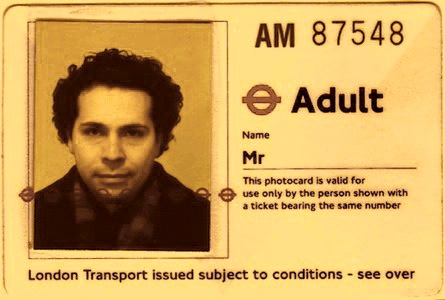
Card photos: No 6's Village cards and No 6 1/2 London Travelcard. Courtesy of CIC.
up