
Earth's Habitat Change
Pouchulu architect
13 - Architectural Actions: Whose Side Are You On?
Architects will have to lead private movements to improve and even re-invent our civilisation (Latin "civitas" = city) but in a new, distorted Habitat. We should approach the challenge of original living spaces by creating sensible structures capable to last many decades, sometimes modular or able to expand, mostly on land or even floating on the seas. In general, industrialised systems tend to de-humanise people. Very rarely large architectural structures promote social behaviour, but the contrary. The main obstacle is neither political nor economical. It sis our own nature as species, we move following immediate-term stimuli, we are still using our genetic memory of a non-top predator animal: we wait till the last minute in order to react or escape. Whether we face a storm or a social unrest situation, we rarely anticipate danger. There is a fragile balance: soon ten billion people will depend on logical decisions. Small communities work better than large ones. We have to protect them, guiding rather than dictating; avoiding large capitals to interfere. Social engineering will never work. Common sense decisions, empirical decisions must emerge. Fortunately, there is hope in non-centralised economies and regions. Freedom is the only concept that can correct mistakes produced in the last hundred years. Any political system that tries to organise society will fail. Any high technoloogy resource, regarding Habitat, like those amazing Space Exploration project developed by NASA, created dozens of gadgets that ended up in our daily routines: smart cameras used today in phones, velcro, new materials... but these fascinating inventions are not sustainable at all, and not necessary, particularly the digital-virtual pandemonium. They are great for astronauts, but contaminant on Earth. Dear architect: we are not floating in space, we are here, on Earth. We do not need high technology to build sustainable architecture. Passive energy can solve most of the insulation issues. Low voltage can solve our limited power needs. Bikes, mono-vehicles, a new generation of steam trains and large sailing ships can cover all our mobility needs... providing we reduce consumerism.
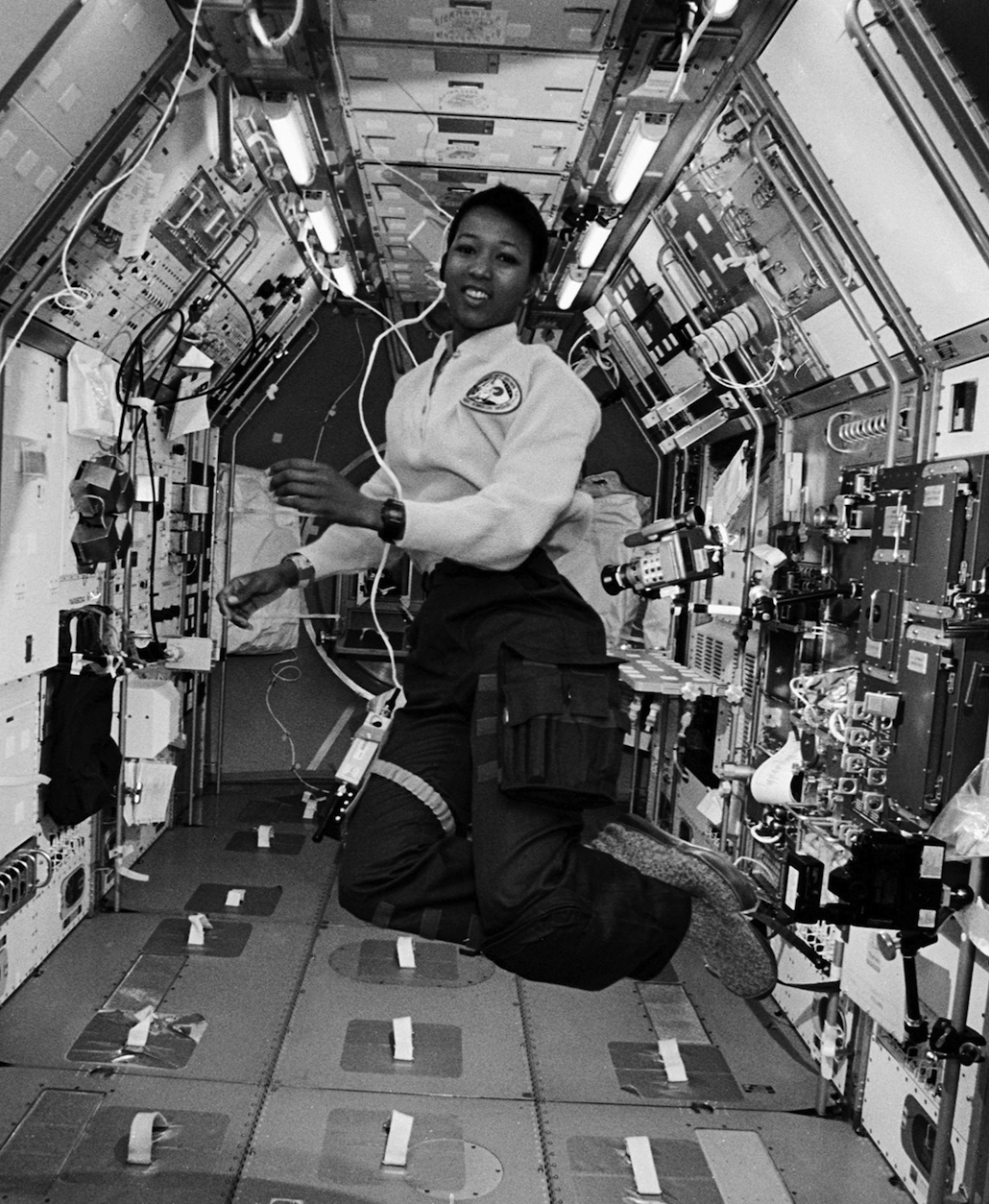
It is uncertain how high technology will evolve when Earth's Habitat visibly shrinks. Industries are related with each other. When we loose Habitat, agriculture fails, the whole industrial complex will have to be re-organised. It is a dramatic challenge. In the picture above, US astronaut Mae Jemison aboard the Earth-orbiting Endeavour, NASA. Photo: courtesy NASA.
What is the purpose of this writings? First, to alert architects and individuals that Habitat Loss is happening right now and it is directly affecting our survival; second, that it was neither modern civilisation nor industrialisation the responsible subjects, but both mad consumerism and propaganda created by global corporations, promoting a series of harmful products that debalanced Habitat, and irresponsible customers. It is our duty to start taking this issue with responsibility, to become leaders in the field; and third, to be able to anticipate new types of urban and suburban settlements. As a start, it is not important to learn how complex Habitat Change is developing, but to acknowledge that it exists, to make decisions and start discussing what to do. There are many lines of possible works. However, I consider important, rather to convince population or governments (the latter is a mirror of the former), to persuade you to start thinking of different cities' environments, far from cybernetics and its madness, which are suffocating our life with control-monitoring devices.
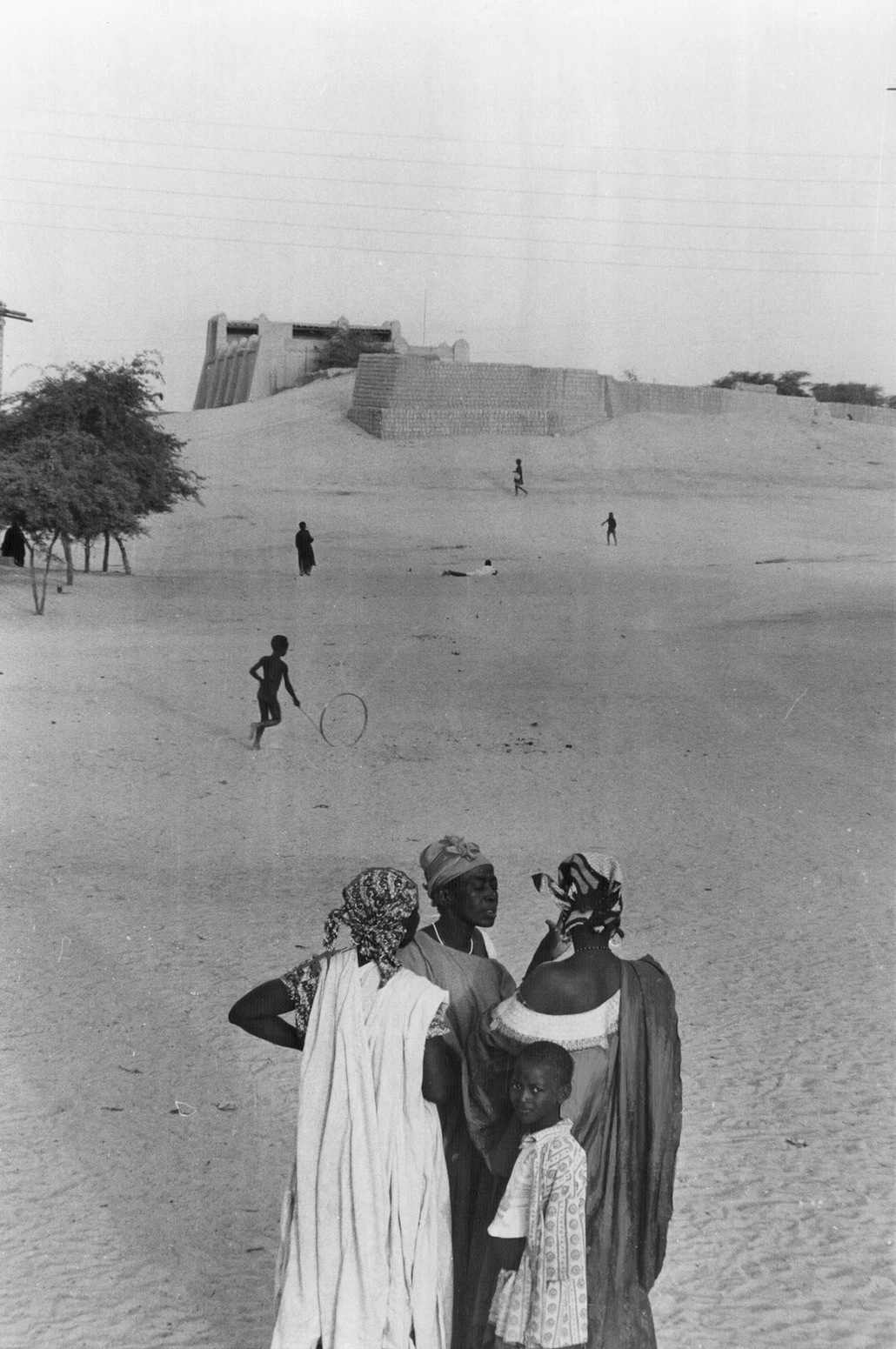
We can adapt to almost any environment. Perhaps we should learn from ancient communities. This picture from Timbuktu, Sahara, shows a children's playground on some old Foreign Legion fort, in 1972. Photo by George Bryant. (Courtesy: Toronto Public Library).
The first steps to rethink our civilisation is to abandon city urbanisations based on large cars. In urban environments we only need small mono-vehicles similar to "bump-cars", they are fun and work perfectly, indeed complemented by bikes, trams and aerial monorails. Intercity trains must replace endless absurd high-speed highways and asphalt-concrete routes, that cut the landscape, sophocate the soil and are very expensive and pollutant. Train transport costs less than 5% compared with cars, which are great -particularly sport cars- but should be used for holidays, to run on gravel routes. Then we must avoid plastic in packaging, plastic clothing, plastic shoes and plastic toys; we must re-use and recycle all we can. To get food from around where we live. To keep away as much as possible from the so called "social networks"; ultimately, they were created to monitor and control people's life while we contemplate our wonderful civilisation collapsing in real time in millions of pixels.
The medium-term steps have to do with deciding how to protect our Habitat. I propose two different programmes: one to help and guide towns, cities and regions in trouble, the other is to design and build new communities, which I name Broadcities. r
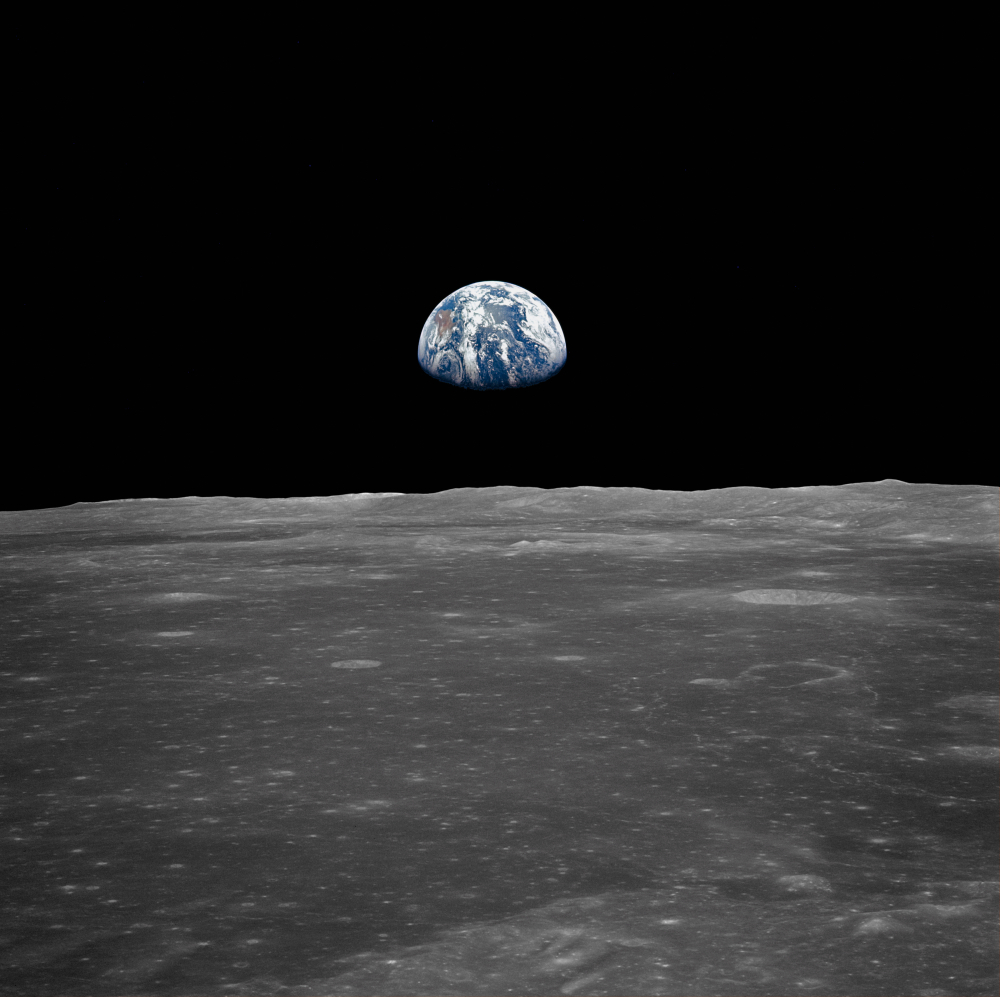
Above, top: Earth from Moon, Apollo 11, 1969 (file: ISD highres AS11 AS11 44 6552l). Habitat Change can be put in context when we watch at this picture from the Apollo 11 mission, whose heroes, astronauts Armstrong, Collins and Aldrin gave us the possibility to realise how incredible is Man's capacity... and how fragile and tiny is our planet.
My programme is not a "tabula rasa"; on the contrary, I am trying to make people aware, to leave behind only what has been destructive policies and practices related to Habitat Loss, in order to re-start simple actions in the right direction. To reforest the Earth, to avoid cars in cities, promoting bikes and small mono-vehicles, trains, and a new generation of large sailing ships. As important, to limit pernicious propaganda related to consumerism. Industries produce things we do not need, but again, that is the way jobs were created since Industrial Revolution. Things are changing now. Remember: the fantasy of sending an email or "instant" message is more contaminant than posting an ordinary letter. When a ship is sinking or when a house is burning, there are two types of people: cowards and heroes. Please think carefully... whose side are you on? Because we are loosing Earth's Habitat, we are damaging our only Home. The first step is to acknowledge.
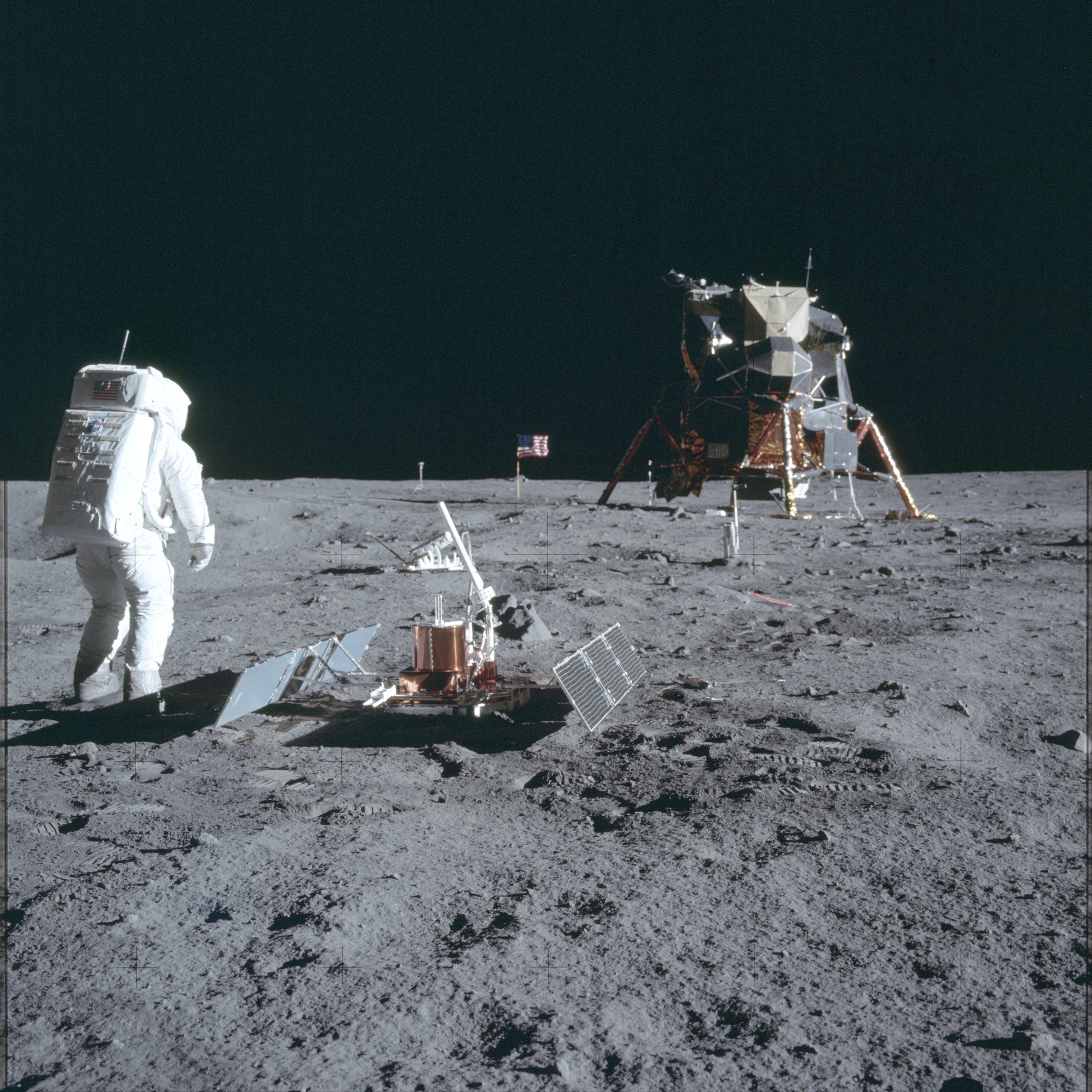
Above: Armstrong placing a Seismic instrument experiment (file:ISD highres AS11-40-5948) Courtesy: NASA Archives.
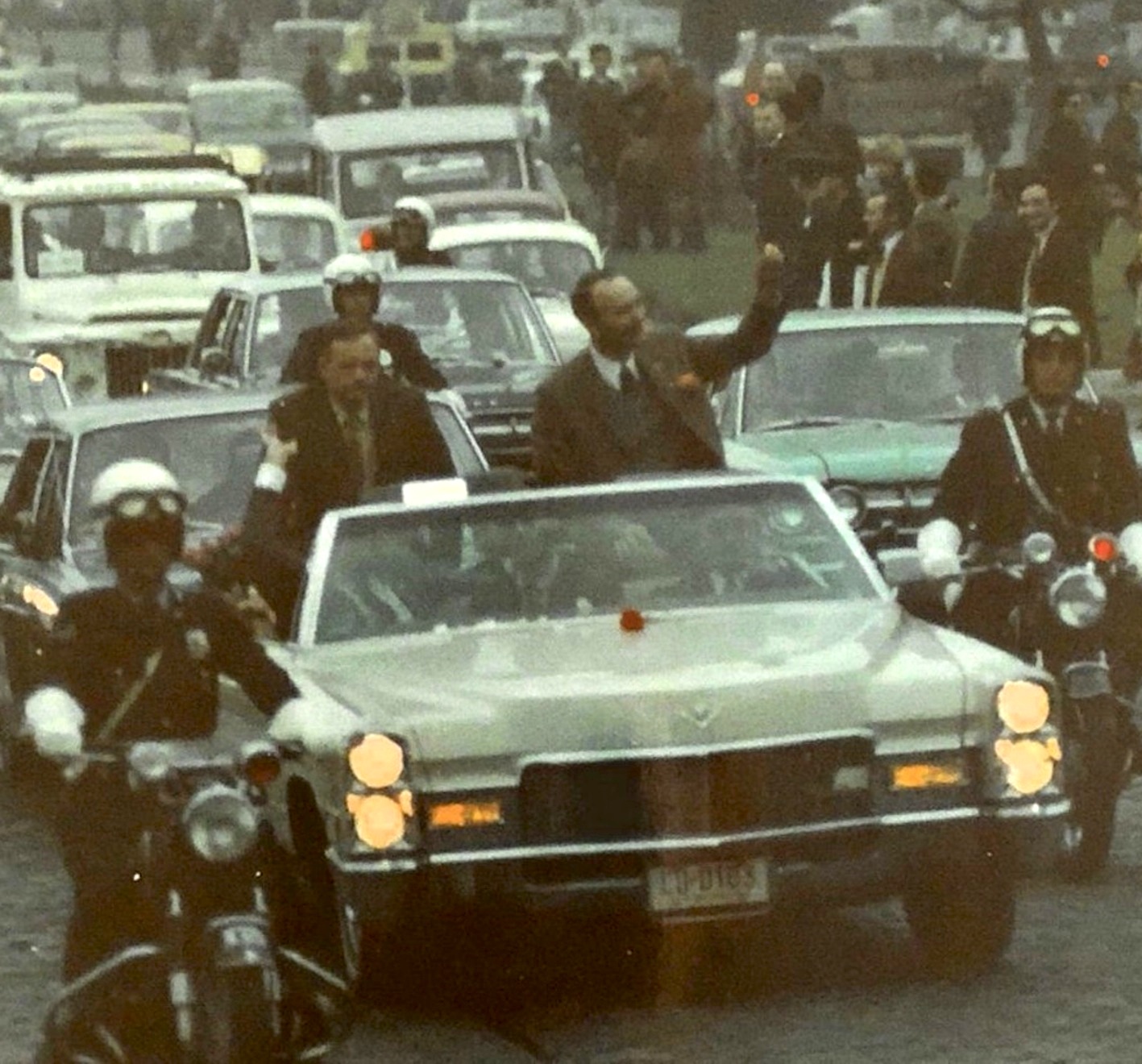
On Sunday, October 2, 1969, about two months after their epic on the Moon, I remember witnessing astronauts Neil Armtrong and Michael Collins on a convertible car in Buenos Aires: my mother Carmen took me to the streets; I was four and a half years old. They were invited by the Argentine Aerospace Comission. In that year, Argentina manufactured a rocket and put a monkey in the stratosfere, priviledged only shared by the US, USSR and France. The astronauts spent two great days, enjoyed the hospitality of Buenos Aires, capital they had visited before. I wonder if today, they would have ridden bicycles instead.
Below, Astronauts Armstrong and Collins waving in Av. Libertador, Buenos Aires; I am there, waving back. Photo: courtesy AGN.
(...) But lo, a stir is in the air!
The wave — there is a movement there!
As if the towers had thrust aside,
In slightly sinking, the dull tide —
As if their tops had feebly given
A void within the filmy Heaven.
The waves have now a redder glow —
The hours are breathing faint and low —
And when, amid no earthly moans,
Down, down that town shall settle hence,
Hell, rising from a thousand thrones,
Shall do it reverence."City in the Sea (last stanza)
Edgar Allan Poe, 1845.
Read the first appendix, Bibliography, here.
1 - 2 - 3 - 4- 5 - 6 - 7 - 8 - 9 - 10 - 11 - 12 - 13 - 14 - 15 - 16 - 17 -
Contact
To contact Patricio Pouchulu click here, or send an email to: architect@pouchulu.com
More information available in Deutsch, English, Español & Français at: www.pouchulu.com